Seasons
Your October order should go out in September
The first cold week is the one week a year you cannot be out of anything. By the time sales tell you it started, the order is already ten days late.
 June Ottoway
Co-founder
Aug 19, 2026
5 min read
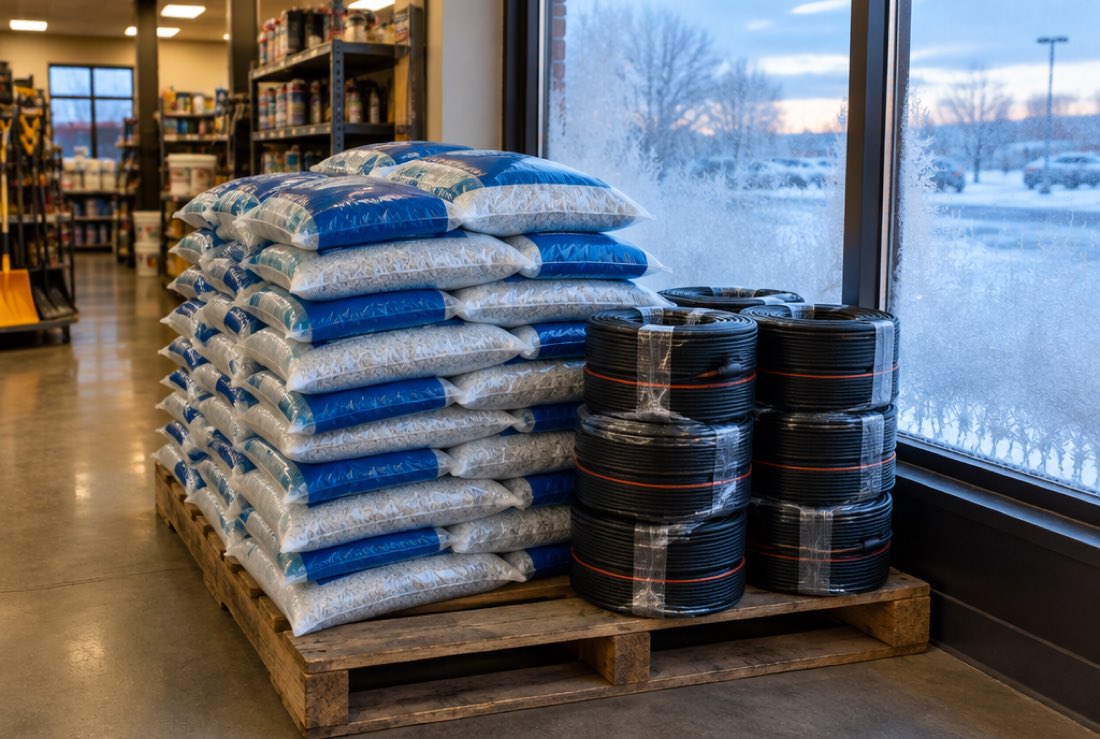
Every store in a cold state has the same four days. The temperature drops overnight, and for the rest of the week everybody in town wants heat tape, pipe insulation, ice melt and window film, in roughly that order.
The trouble is that the signal and the response run on different clocks. Sales tell you the week has started on the day it starts. A distributor takes five to eight days. The order you place on the first cold morning arrives for the tail end of a week that is already over.
Order against the calendar, not the register
Seasonal items are the one case where you should stop reacting to sales and start ordering against a date. Not a date somebody else picked — the date your own store's sales have climbed in each of the last three years.
- Find the week the item started climbing, each year, for three years.
- Take the earliest of the three and back up by your supplier's lead time.
- Raise the minimum on that date, not on the day it gets cold.
What it costs to be early
Carrying forty boxes of heat tape two weeks earlier than you need them costs you the money for two weeks. Being out of heat tape during the freeze costs you the sale, the add-on sale, and some part of the relationship.
Seasonal stock is the cheapest insurance in the store, as long as you buy it before the event.
And when the window closes in March, the minimum should come back down on its own. Carrying winter stock through July is the other half of the mistake.